


De Stijl - Beyond An Art Movement
- Apr 9, 2018
- 4 min read
Updated: May 8, 2018

The “De Stijl” Art Movement came into being in 1917, and is considered to have continued/evolved until 1931.
De Stijl at its core was created to be a completely new aesthetic sense, which would influence every aspect of life. The creators and proponents sought to use this art movement to create a simpler, harmonious new way within the post war society.
The goal of “De Stijl” was to make art as scientifically precise and perfect as possible, and that defined its simplicity. Its visual elements were reliant on geometric forms and basic colours. Thus, while De Stijl artwork seemed to lack visual flair and colours, it had amazing composition and balance.
DE STIJL CREATORS
De Stijl is viewed by the creators as a universal visual language positioned contrarian to the excessively decorative “Art Deco”. De Stijl artists expanded the usage of the art style in all other art forms, most notably in architecture, creating the “International Style” in the 1920’s and 1930’s.
The De Stijl movement is credited to two major figures: the Dutch artists Theo van Doesburg and Piet Mondrian.

Theo van Doesburg was a Dutch designer, painter, and architect, credited as the founding father of the De Stijl movement
Born on August 30, 1883 in Netherlands, he championed the De Stijl movement from 1917 until his death in 1931 in Switzerland.
He was influenced by Vincent von Gogh until 1913, and by Wassily Kandinsky’s work after that. He began developing his own version of De Stijl in 1916, and eventually launched De Stijl in 1917 with Mondrian, van der Leck, and Oud.
Van Doesburg’s work under the De Stijl movement is called Elementarism, and van Doesburg wanted to bring more variety, movement, and energy to the art form he wanted to inspire. He created several architectural designs, as well as other functional, daily items that were designed to holistically work together while being carefully related to each other. Also, he tried to convey that his minimalistic philosophy had spiritual and moral uplifting qualities, as well as have ability to achieve social order.


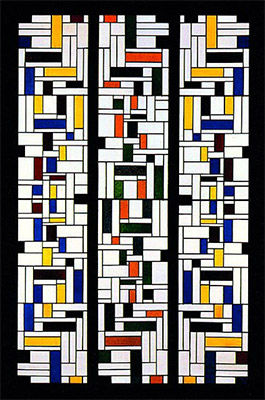

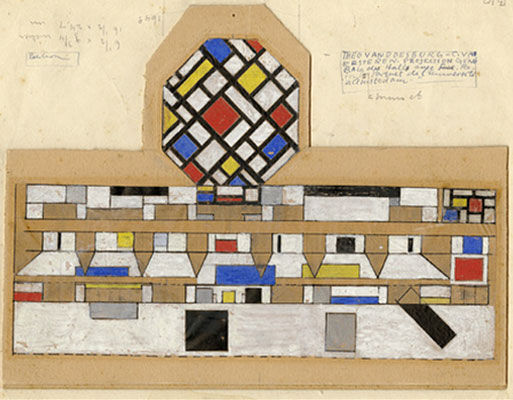


De Stijl’s enduring legacy and popularity is largely due to its true master and best-known member, Piet Mondrian. Born on March 7, 1872 in Netherlands, he championed the De Stijl movement from 1917 until his death in 1924 in New York.
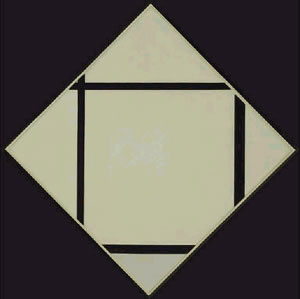
Mondrian’s biggest transformation was when he moved to Paris and was heavily influenced by Cubism, which would go on to become the basis of his post-Paris work, namely modern abstractions. However, the biggest difference is that Mondrian utilized Cubism in a flat-surfaced framework, instead of utilizing the three-dimensional nature. This also led to his personal De Stijl philosophy: Neoplasticism. Mondrian’s personal De Stijl philosophy, Neoplasticism, deferred from van Doesburg’s philosophy, Elementarism, and it caused them to split the movement in 1924. Mondrian’s work reflected the basic spirituality of nature, and thus his paintings used the most basic elemental subjects to showcase the mystical energy governing the universe. His compositions were essentially dynamic, utilizing horizontal and vertical elements to reflect basic opposing forces and their balance in the universe.




MORE ABOUT DE STIJL CONCEPT AND STYLES
Neo-Plasticism was the design concept or style propagated by Piet Mondrian which is also called the “New Plastic Art”, and is focused on simplistic design elements such as straight lines and primary colours, reducing the emphasis on traditional art elements. Mondrian believed that Neo-Plasticism concepts of art can be emphasized in other design aspects, such as Architecture and Object Design, leading to a new design language for society.
Neo-Plasticism was inspired by MHJ Schoenmaeker’s writeup, Beginselen der Beeldende Wiskunde (The Principles of Plastic Mathematics), primarily the concept of opposing forces, such as vertical and horizontal axes.
Elementarism was the design philosophy advocated by van Doesburg from 1925, after the split in the De Stijl movement from Mondrian. It involved extending the Neo-Plasticism concept of vertical and horizontal axes to include a diagonal, as a concept of the “state of continuous development”, or dynamism. As per van Doesburg, the horizontal and vertical axes emphasize the physical nature of humanity, without adding a spiritual aspect.
Elementarism, in a way, was a more dynamic representation of the purist art form that was Neo-Plasticism, deriving itself from the basic principles encapsulated in Mondrian’s philosophy. Van Doesburg named his paintings based on this concept as “Counter-Compositions”, and they were closer in philosophy to Futurism and Vorticism (both utilize diagonals and tilting in their art). However, van Doesburg wanted De Stijl to be an architectural and interior design inspiration, so he tried to incorporate Elementarism in the Bauhaus Design School as well as with Russian Constructivism
DE STIJL INSPIRED FURNITURE: DRESSING TABLE


The characteristics of this movement were that it was defined by simplicity and lack of visual flare. It was all about composition and balance. The focus was purely on simplistic design elements like straight lines, plane surfaces and primary colours (red, yellow, and blue) combined with neutrals (black, gray, and white), reducing emphasis on traditional art elements. These characteristics formed the basis of the designed product.
Refereces
· Karl Rhrberg, K. H. M. S. C. F., 2000. Abstraction and Reality. In: Art of the 20th Century, Part I. s.l.:Taschen, p. 840.
· The Museum of Modern Art, 1952. MoMA. [Online] Available at: https:/www.moma.org/documents/moma_catalogue_1798_300159061.pdf [Accessed 2017].
· The Art Story, n.d. The Art Story. [Online] Available at: http:/www.theartstory.org/movement-de-stijl.htm [Accessed 2017].


Comments